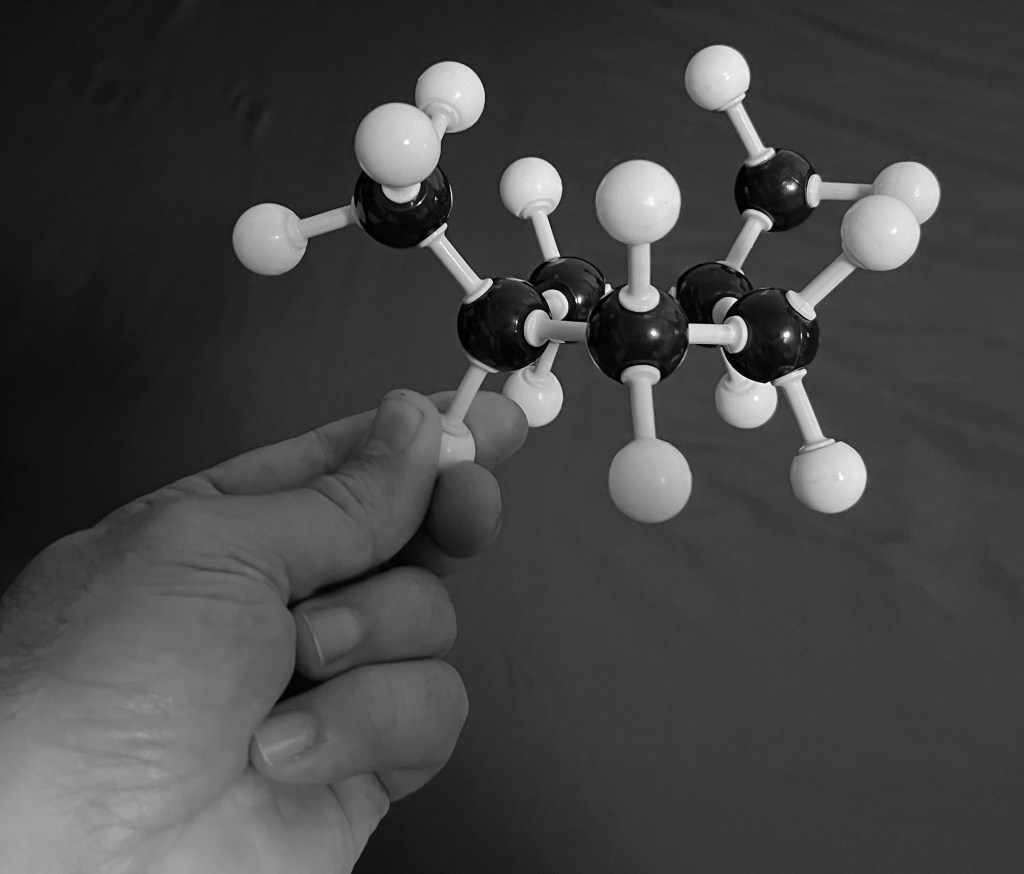
I decided to call this blog The Model Kit because the way that I have come to approach teaching organic chemistry is to begin with these simple physical molecular models and to teach the subject in a similar way as an artist learns to draw by observing an object.
Learning organic chemistry is often compared to learning a second language because the ubiquitous drawings of molecules are akin to a pictographic language. The alphabet of this language is the periodic table of the elements, the molecules are its sentences, and chemical reactions are the stories we tell.
This is a good analogy, as far as they go, but I always felt that it was missing something. Chemistry is like a second language, but it is also like visual art because on one level we are simply drawing an approximation of what these molecules look like. To be sure, our drawings are highly technical and abstract, and these are not objects that can even be seen by the naked eye. But we are still communicating structure, internal movement, and transformation by drawing pictures sequentially. Why not begin with that intuitive premise?
Starting with the model and learning the molecular drawings by drawing the model is similar to how a comic book artist or mangaka starts by learning to draw realistic faces from life and then stylizes and simplifies down to an expressive and appealing cartoon style. They learn which details to emphasize and which to leave unexpressed. Ultimately, they will become conscious of the purpose of the drawings; what they are meant to convey. These models are simple, but they are undergirded by a system of theoretical parts that must click into place before the structure and reactivity of these molecules can finally be understood.
Plus, it just makes the classroom experience more fun and memorable. Bring your drawing supplies and your model kits to the lecture and we will do something interesting and interactive with them. That is my goal.
 The Model Kit
Leave a comment